Land-scale resilience
Terraces, water access, gravity, food production, solar, wind, micro-hydro concepts and practical off-grid infrastructure create a field laboratory for productive land.
 \2
\2
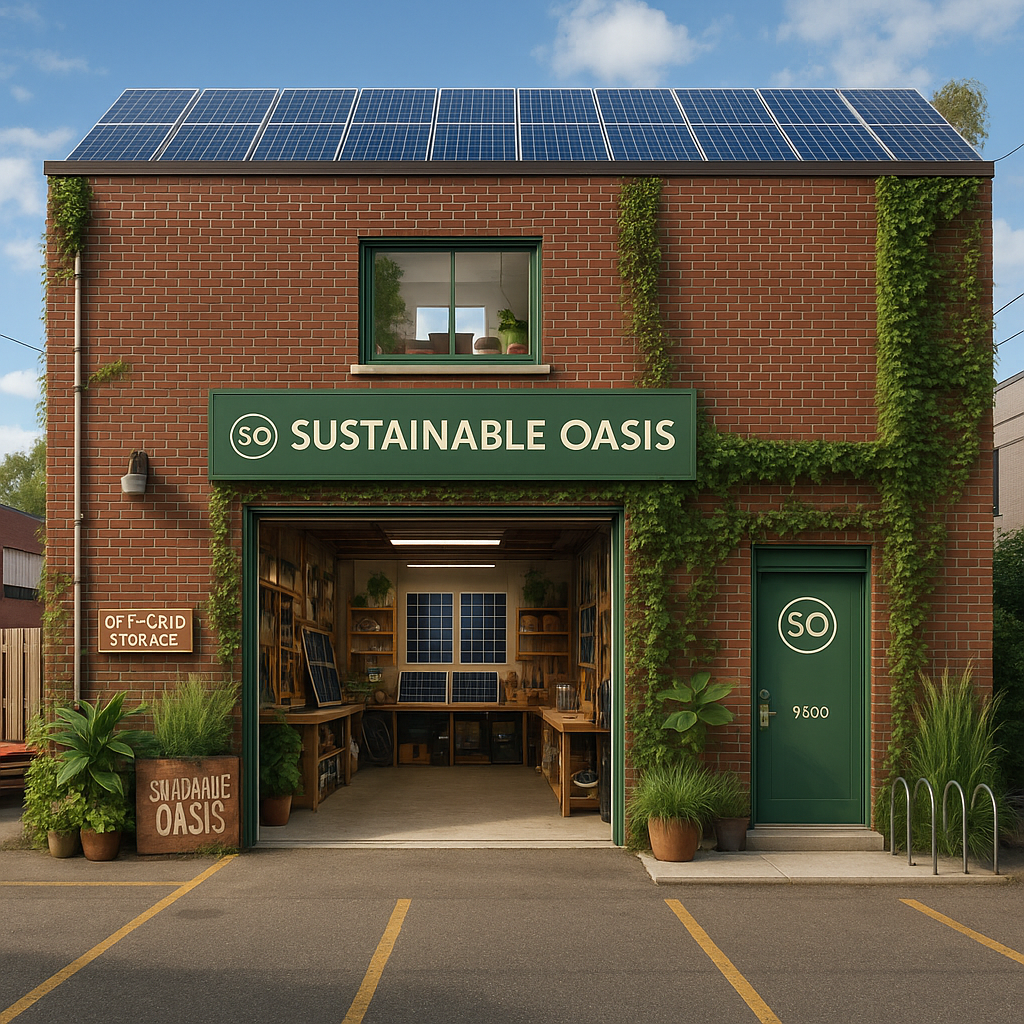
Sustainable Oasis develops through real environments, not theory alone. Montréal, Vietnam and the Digital Control Room each test a different layer of resilience — physical systems, land-based systems and the economic intelligence that connects them.
The objective is not to prove that every idea works. It is to discover which combinations of systems create the greatest resilience for their cost and complexity.
Terraces, water access, gravity, food production, solar, wind, micro-hydro concepts and practical off-grid infrastructure create a field laboratory for productive land.
A practical research and demonstration environment for construction, aquaponics, water systems, sensors, automation, energy ideas and community learning.
Web infrastructure, automation, AI-assisted workflows, publishing, analytics and revenue systems help finance and coordinate the physical mission.
Each research area is a module. A future Oasis can combine different modules according to climate, resources, regulations, budget and local capability.
Explore decentralized renewable generation, storage and demand management.
Water as infrastructure for drinking, agriculture, ecology, storage and energy experiments.
Gardens, aquaponics, local food production and efficient water use.
Modular, repairable and efficient construction adapted to local materials and climate.
Sensors, automation and AI help people understand and manage systems rather than hiding them.
Unconventional energy concepts are experiments only, with careful instrumentation and no claims beyond measured evidence.
“We do not need every experiment to succeed. We need every experiment to teach us something useful.”
Sustainable Oasis · Living Lab philosophyA functioning Living Lab creates evidence that strengthens education, grants, partnerships, products, services and future site design.
Workshops, books, reports and demonstrations become stronger when built from field experience.
Measured prototypes create stronger grant applications and clearer reasons for partners to participate.
Documented systems become templates future Oases can adapt to different environments.